
 driveway contractor san diego
Driveway Contractor in San Diego: Base Prep and Materials
Anthony Criss · November 28, 2026
Key takeaways
What is under your driveway matters more than the surface material you pick.
Pavers need a 6-8 in. compacted aggregate base; concrete thickness depends on the vehicles that will use it.
Expansive clay, irrigation water and poor drainage cause many North County driveway cracks.
The apron, curb cut and sidewalk are public right-of-way and usually need a permit.
Ask for the base depth, compaction, drainage and permit responsibility in writing.
A good driveway in San Diego comes down to three decisions: how the base and soil are prepared, which material fits the way you use the driveway, and who handles the apron at the street, which the city controls. The surface matters less than what is under it. At AJ Criss Industries, we build paver and concrete driveways across North County, Escondido and greater San Diego.
This guide explains what proper prep looks like in real numbers, why driveways crack in our clay soils, and what to ask any contractor before you sign.
Which driveway material fits how you use it
The main choices are interlocking pavers and poured concrete, which can be plain, colored or acid stained. For a full cost and repair comparison, see our pavers vs concrete driveway breakdown. Here is the short version.
Interlocking pavers: individual units on a compacted base. They can be lifted and reinstated after a utility or base repair, so no jackhammer is needed. See our interlocking paver work.
Poured concrete: a single slab that can be colored or stained. Repairs usually mean cutting out a section. See our color and acid stain concrete options.
Thickness depends on the vehicles
For pavers, the Interlocking Concrete Pavement Institute recommends 2⅜ in. (60 mm) units for residential driveways and typically 3⅛ in. (80 mm) where traffic is heavier. It also says thin overlay pavers, 1¼ to 1¾ in., are not recommended for any vehicle use.
For concrete, the Michigan Concrete Association's thickness guide suggests 4 in. for passenger cars and light trucks, 5-6 in. for light-to-medium trucks, and 7 in. or more for heavy commercial trucks. That is a cold-climate source, so treat it as a published guideline rather than San Diego code. If an RV or delivery trucks will park on your driveway, tell your contractor so the thickness is chosen for that load.
Base prep: what a durable driveway sits on
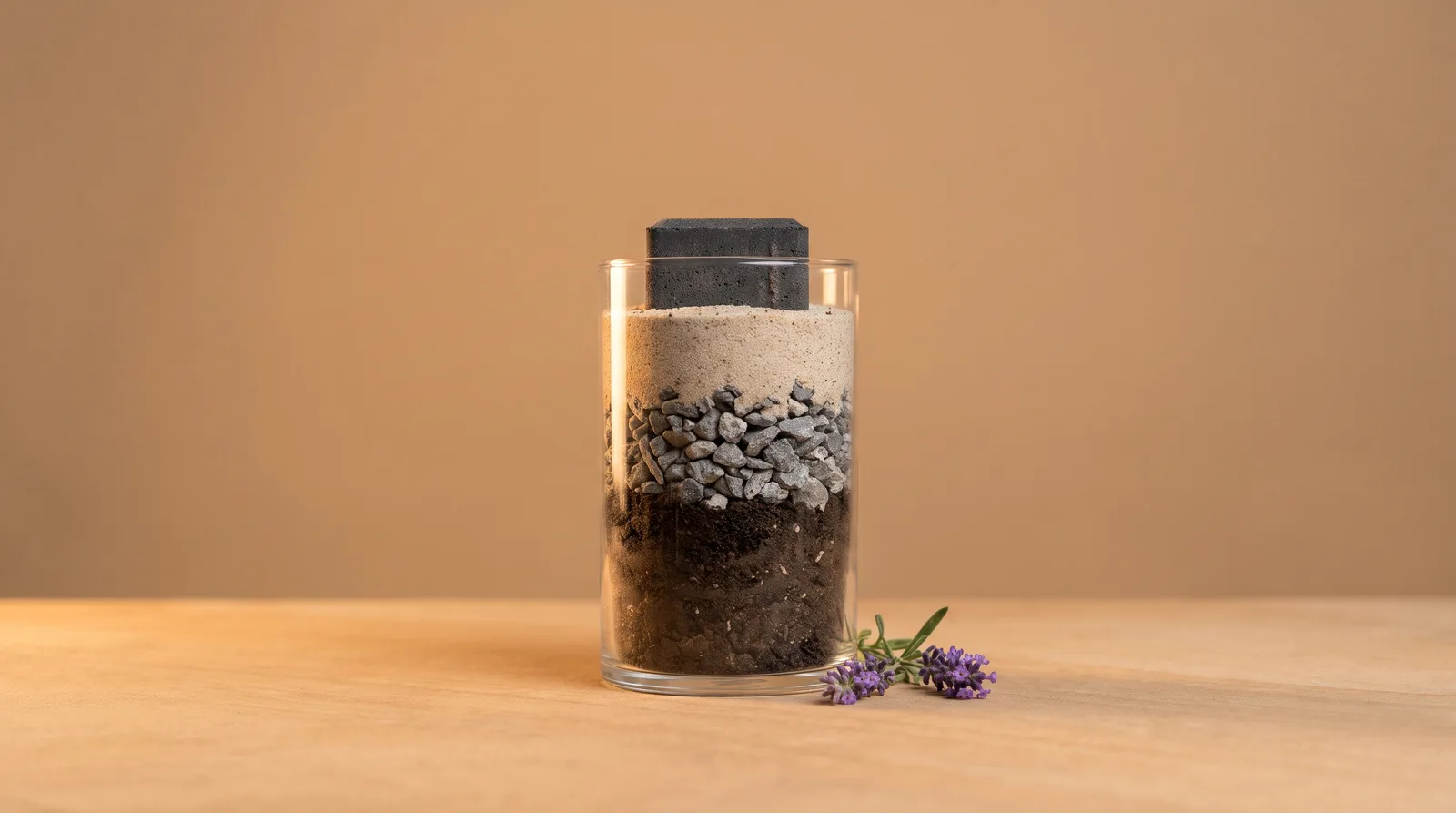
Most failed driveways fail from below. For pavers, the ICPI spec calls for a 6-8 in. aggregate base under residential driveways, thicker if the site or traffic demands it. The soil subgrade and base should be compacted to at least 98% standard Proctor density. A base that thick is built in several compacted lifts, not dumped in one pass.
Excavate to the depth that fits the base, bedding sand and paver thickness, and remove soft or unstable soil.
Compact the subgrade, then build the aggregate base in lifts, compacting each one.
Check the base surface with a straightedge. The ICPI tolerance is ±3/8 in. over 10 ft.
Screed 1-1½ in. of bedding sand. It cannot fill dips in the base, because they show through in the finished surface.
Install edge restraints. The ICPI calls them essential because they hold the pavers and sand in place.
The ICPI also recommends 45° or 90° herringbone patterns where vehicles drive continually, and it advises against mortared or adhesive-set pavers under vehicles, since mortared joints are at high risk of deterioration. Ask any paver installer what base depth and compaction they specify. Our guide to hiring a paver installer covers what real base prep and edging look like.
Why North County driveways crack, and what helps
Much of San Diego County sits on clay that swells when wet and shrinks when dry. Geotechnical reports filed with the County describe this movement as damaging to flatwork. One County-filed report for a York Drive site recommends compacting subgrade to 95% for traffic pavements, presoaking medium-expansive soil to 120% of optimum moisture to 18 in. deep, and proof-testing moisture before the pour.
Irrigation matters too. A sprinkler head soaking the edge of a slab keeps the soil underneath moving. Fix spray patterns and leaks near the driveway, and see our notes on sprinkler repair in Escondido.
What a contractor can control, and what nobody can promise
Good contractors control compaction, soil moisture, joint layout, reinforcement, and concrete placement and curing. Another County-filed report, for a Valley Center site, recommends crack-control joints and tying flatwork to curbs where practical. It also warns that flatwork could still experience uplift even when every recommendation is followed. Hairline shrinkage cracks in concrete are normal. Be wary of any contractor who promises a crack-free slab.
Drainage and slope
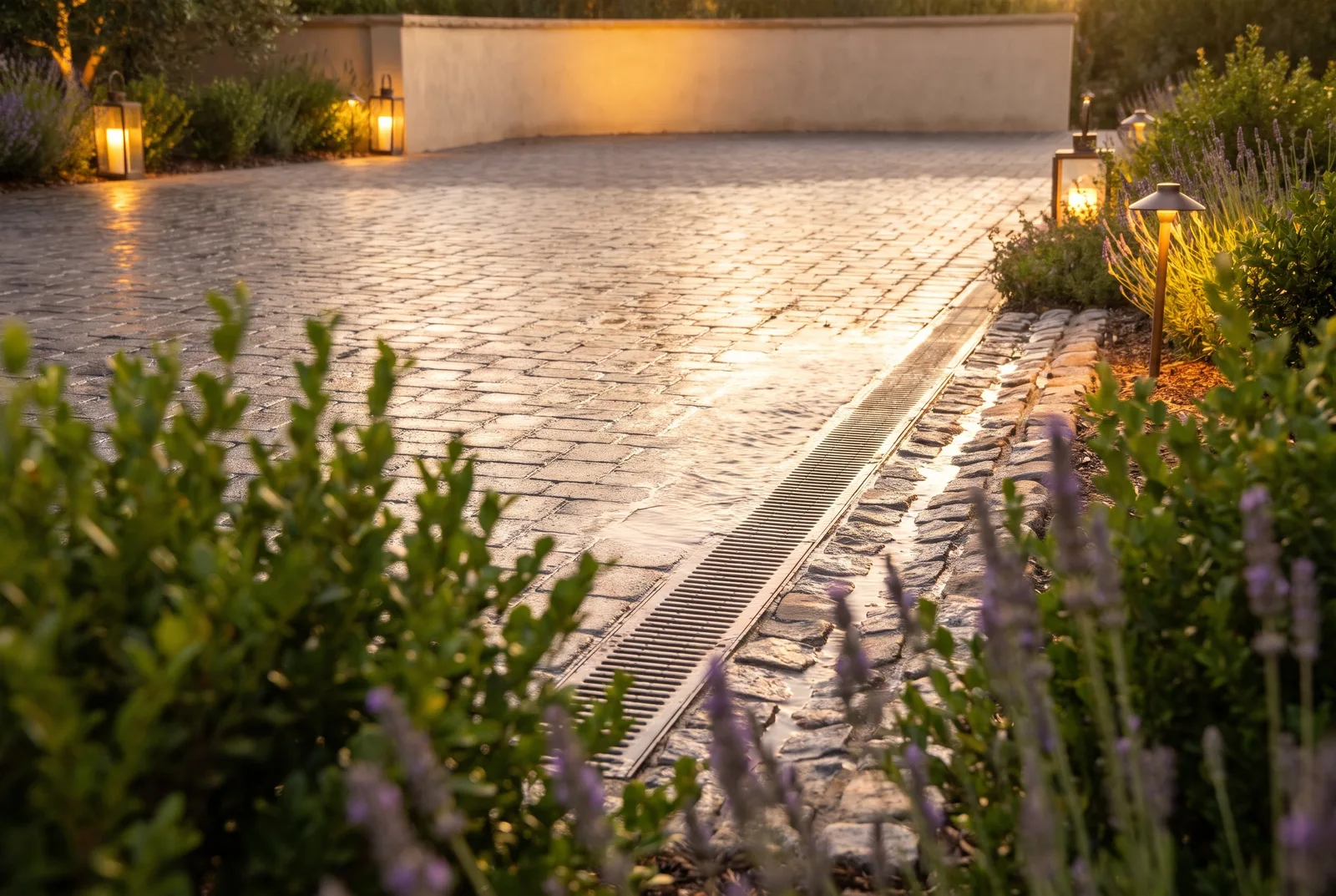
A driveway that sheds water toward the garage or ponds at the street will fail early and cause other problems. Water should leave the surface and be directed to a safe outlet, not sit on the base. Diagnosing where water goes is part of our drainage installation work, and our guide to finding the cause of drainage problems explains the process. If you are adding a driveway, plan the slope and any drains before the base goes in, not after.
Permits and the property line
Your driveway ends where the public right-of-way begins. The apron, curb cut and sidewalk belong to the city or County, and the rules differ by jurisdiction. Always confirm with your own city, and we can tell you which one applies to your address.
City of San Diego: the municipal code's residential driveway permit section bars building, improving or repairing a residential driveway in the right-of-way without a permit. The City's right-of-way permit bulletin lists standard residential driveway work as a Rapid Review project, with non-standard driveways submitted with plans.
Escondido: the city's encroachment permit rule requires a permit to excavate or build in the right-of-way, and working without one is a misdemeanor. The encroachment form lists $300,000 general liability insurance for driveway work and approval times of 4 to 6 working days, sometimes several weeks.
Unincorporated County: the County's construction permit brochure requires a Construction Permit and Traffic Control Permit for driveway work in the County right-of-way. Self-certification for private driveways serving no more than two lots needs a registered California contractor and excludes projects with retaining walls.
Work on your own lot is treated differently. County building-permit requirements exempt driveways not more than 30 inches above adjacent grade, though that document is older, so confirm current rules. If your driveway needs a retaining wall, read our guide to hiring a retaining wall contractor.
How to choose a driveway contractor
Check the CSLB license and insurance. Escondido's permit requires an appropriate state license.
Ask who pulls the permit for the apron, curb cut or sidewalk work.
Get the base depth and compaction spec in writing.
Ask how drainage and slope will be handled.
Ask for the private slab and the apron work as separate lines in the bid.
Our overview of choosing a landscaping contractor covers comparing bids on scope.
Do I need a permit for a new driveway in San Diego?
If the work touches the apron, curb cut or sidewalk, yes, in the City of San Diego, Escondido and unincorporated County alike. Work only on your own lot may be treated differently. Confirm with your jurisdiction before starting.
How thick should a driveway be?
Published guidance for concrete is about 4 in. for cars and light trucks and 5-6 in. for heavier trucks. Pavers are typically 2⅜ in. for residential use over a 6-8 in. compacted base. Tell your contractor about RVs or heavy vehicles.
Can I put pavers over my old slab?
The ICPI does not recommend thin pavers, 1¼ to 1¾ in., as overlays for any vehicle use. An overlay over impervious or expansive soils also needs drain holes piped to an outlet. In most cases, a proper base is the better choice.
Do you handle drainage problems at the driveway?
Yes. We diagnose where water is going and correct slope, drains and outlets as part of the project, so water does not collect at the apron or run toward the garage.
Get a driveway built from the ground up
Pick the material that suits your use, but spend your attention on the base, soil moisture, drainage and permits. Those decide how long the driveway lasts. To talk through your site, request a quote from AJ Criss Industries, and we will walk the property and explain what it needs.
Sources
Application Guide for Interlocking Concrete Pavements Product Description — Interlocking Concrete Pavement Institute
Concrete vs. Asphalt: Comparing Thickness and Strengths — Michigan Concrete Association
PRELIMINARY GEOTECHNICAL EVALUATION YORK INDEPENDENT LIVING PROJECT YORK DRIVE — County of San Diego
GEOTECHNICAL INVESTIGATION SOUTH VILLAGE STORAGE VALLEY CENTER ROAD AND — County of San Diego
SEC. 71.402.5. RESIDENTIAL DRIVEWAY PERMIT. — City of San Diego
Obtaining a Public Right-of-Way Permit for Standard Public Improvements — City of San Diego
Sec. 23-8. Encroachment permits. — City of Escondido
City of Escondido, CA: Annual permit requirements. — City of Escondido
Building Permit Requirements — County of San Diego
City of Escondido Field Engineering 201 North Broadway — City of Escondido
SCP - What Projects Qualify? - Private Driveways — County of San Diego
DPW Rev. July/2024 County of San Diego Planning and Development Business — County of San Diego