
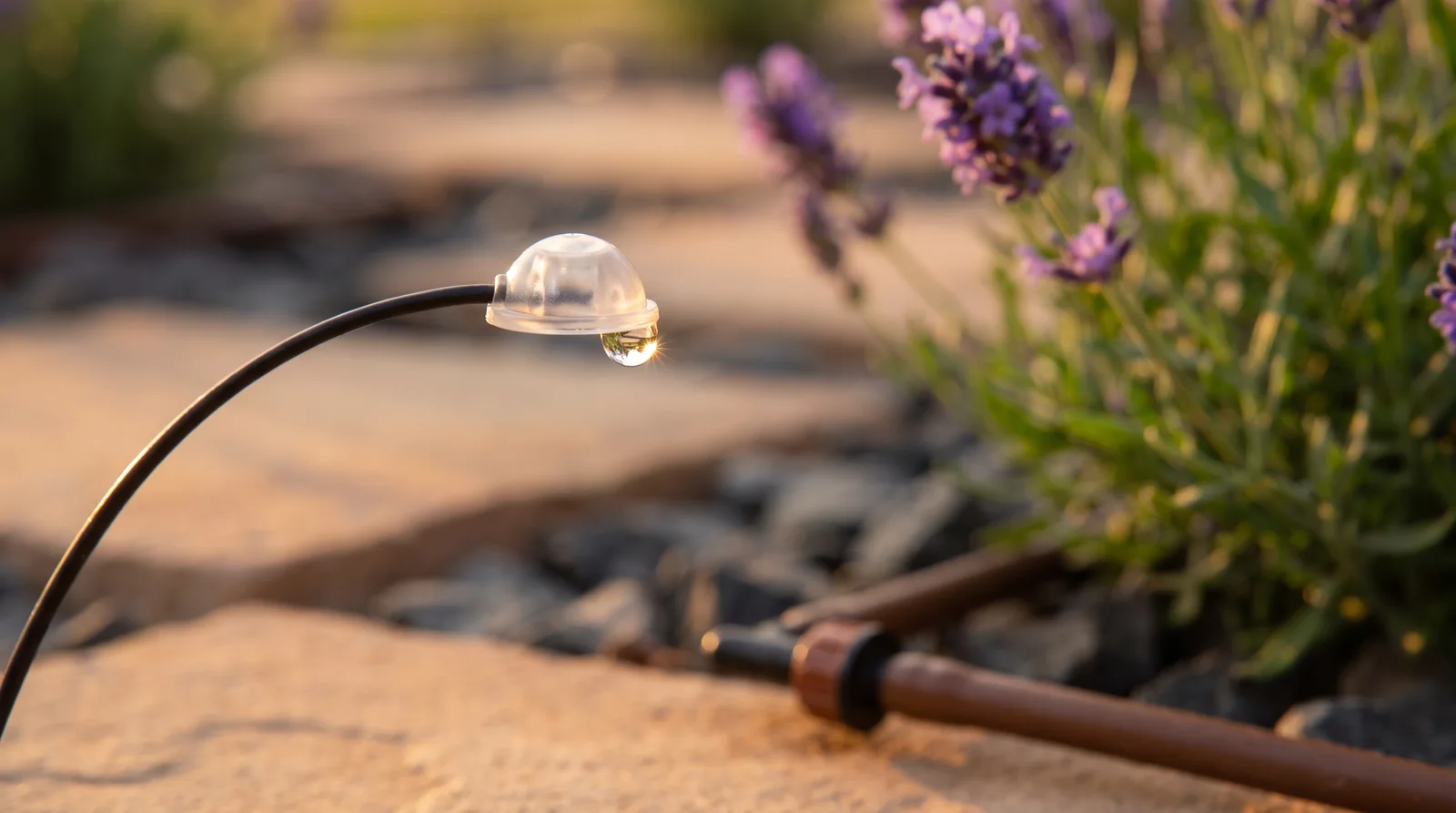
 smart irrigation
Smart Irrigation Controllers for San Diego Yards
Anthony Criss · November 18, 2026
Key takeaways
A WaterSense labeled controller can save an average home up to 15,000 gallons a year, but only when zones and settings are right.
Zoning matters as much as the controller: turf, shrubs, slopes and drip beds need separate valves.
Poorly programmed controllers can raise water use, so setup counts more than the box.
Fix broken heads, pressure problems and runoff before you upgrade.
A smart controller does not exempt you from Escondido's watering rules, and rebates are applied for after purchase.
A smart sprinkler system saves the most water when the controller, the zones and the programming all match your yard. The EPA says swapping a clock-based controller for a WaterSense labeled one can save an average home up to 15,000 gallons a year. Your results depend on how much you overwatered before and how well the system is set up. Rebates may offset part of the cost.
At AJ Criss Industries, we install and repair irrigation across Escondido and North County. This guide covers what we check first, from controller type to zoning to local rules.
Weather-based, soil moisture or both?
WaterSense labels two kinds of smart controller. Weather-based controllers adjust watering to local conditions. Soil moisture-based systems use sensors in the ground. EPA says labeled weather-based models save an average home nearly 7,600 gallons a year and must be independently certified for irrigation adequacy, irrigation excess and supplemental capabilities such as honoring watering restrictions.
For soil moisture, EPA reports labeled sensors save more than 15,000 gallons a year. They work by overriding a scheduled cycle when the soil does not need water.
Weather-based: a good fit for most yards with mixed turf and planting, since it adjusts schedules as conditions change.
Soil moisture sensor: useful where soil varies, such as slopes, clay pockets or shaded sides, as long as the probe sits in a representative spot.
Both: worth discussing on larger properties where one zone has very different soil from the rest.
State rules point the same way. California's model landscape ordinance calls for an automatic controller using weather or soil moisture data, with non-volatile memory and a rain sensor.
Zones are the real lever
A smart controller can only schedule the valves you give it. If one valve feeds lawn, a shrub bed and a sunny slope, no setting will be right for all three. The goal is hydrozones: each valve serves plants with similar sun, slope, soil and water needs, with sprinklers that put water down at the same rate.
Here is a typical North County lot, before and after:
Before: one valve runs front lawn, a slope and foundation shrubs together. The lawn gets enough water, the slope runs off and the shrubs sit wet.
After: lawn on its own valve with matched rotors or sprays, the slope on a slower cycle-and-soak schedule, shrubs and groundcover on drip, and the shaded side on a separate, shorter schedule.
Mixing spray heads and rotors on one valve is a common problem. They apply water at very different rates, so one area floods while the other stays dry. If you are replacing turf, our sod installation page explains how soil prep affects how much water the new lawn needs.
Sensors worth adding
Rain sensor: stops cycles during rain. It is also part of the state ordinance's controller requirements.
Wind sensor: useful on exposed hillsides where spray drifts onto pavement.
Flow sensor with a master valve: can shut down a zone or the whole system if a line breaks, so a broken pipe does not run all night.
Placement matters. A rain sensor under an eave or a soil probe beside a downspout reports conditions that do not match the yard. We mount them in open, representative spots and test them after install.
Setup decides whether you actually save
Be realistic about savings. EPA's supporting statement cites studies with savings of roughly 6 to 30 percent, including a California evaluation that found about 6 percent in year one and 16 percent in year three. It also notes some homes used more water after installation because the controller was not properly programmed.
Good programming starts with the site: soil type, slope, plant root depth, sprinkler precipitation rate and shade. Clay soil on a slope takes water slowly, so short repeated cycles beat one long run. Seasonal adjustments and a check after the first few weeks catch what the settings missed.
The payoff can be large on big properties. An EPA case study describes an office park that cut irrigation use about 40 percent after an irrigation audit and a weather-based controller with rain and freeze sensors, saving 12.5 million gallons and $47,000 in the first year.
Fix the system before you upgrade it
A new controller will not fix a leaking lateral, a tilted head or pressure that is too high. High pressure turns spray into mist that drifts away. Mismatched nozzles leave dry patches next to soggy ones. We walk the system with each valve running and note every fix before recommending a controller.
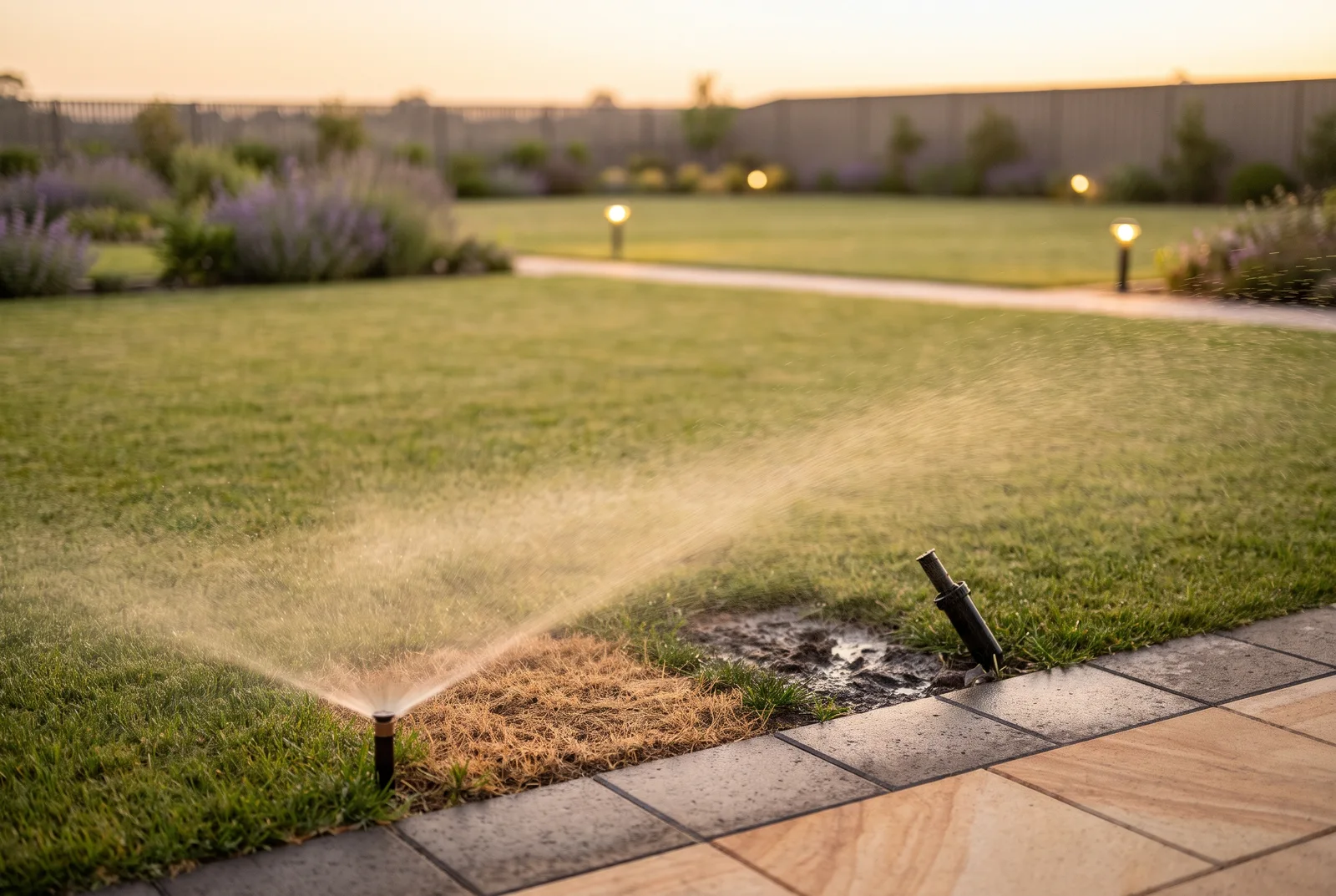
Runoff is where irrigation meets hardscape. Heads that overspray a driveway, patio or wall waste water and can stain or undermine the surface. State guidance also calls for low-volume irrigation near paving. If water pools or runs off after irrigation or rain, the cause may be grading rather than sprinklers, which is where our drainage repair work comes in.
Escondido rules in plain English
A smart controller does not exempt you from local code, so program it to match. The City of Escondido prohibits irrigating during rain or within 48 hours of measurable rain, and allows watering only from 6 pm to 10 am.
The city's water conservation code limits irrigation to 10 minutes per station, though that limit does not apply to drip or stream rotor systems. Outside Escondido, check your own city or water district, since rules vary.
Rebates: who qualifies and when to apply
Three programs can overlap, so confirm which applies to your address. The Water Authority's residential page lists SoCal WaterSmart incentives starting at $80 per controller for residential sites under one acre and $35 per station for larger sites, capped at the purchase price.
The County's Waterscape program offers up to $80 per controller or $60 per station. Its eligibility page limits it to unincorporated areas with water from a Water Authority member agency and an EPA WaterSense-certified weather-based controller. Residential applicants apply after purchase and installation, while commercial properties need pre-approval before buying.
Escondido is an incorporated city, so residents should start with SoCal WaterSmart or their local water agency. The County's FAQ notes that smart controller rebates are applied for after purchase and that a rebate of $600 or more triggers a 1099. Amounts change, so verify current figures before you buy.
Who should pick what
Homeowner with an older, working system: audit first, fix heads and zones, then add a weather-based controller.
New landscape or turf conversion: design the zones and drip layout around the controller from the start.
HOA or commercial site: pre-approval rules differ, so confirm rebates before purchase, and consider flow sensors with a master valve.
Hillside lot: prioritize slope zones, slower application and drainage, along with any retaining walls.
Our sprinklers and irrigation page and our guide to sprinkler and smart irrigation installation in Escondido cover what an install involves.
Common questions
Can my old sprinkler system be fitted with a smart controller?
Often yes. If the valves, wiring and pipes are sound, a controller can be swapped in. We check pressure, heads and zoning first, because those problems waste water no matter which controller you use.
Does a smart controller fix drainage problems?
No. It stops overwatering, but pooling after rain usually comes from grading or missing drains. We diagnose the cause and fix it separately, often with a French drain or downspout connection.
Is a smart sprinkler system worth it in Escondido?
It can be, especially if you now overwater or have mixed zones. Savings range widely, so expect a modest gain from a clean setup and more from fixing zones. Check rebates before you buy.
Do I need a permit for irrigation work?
Small repairs and controller swaps usually do not. New or rehabilitated landscapes above certain sizes may fall under the state ordinance and need review. Check with your city before a larger project.
Start with an on-site look
The controller is the easy part. Zones, pressure, sensor placement and programming decide whether it saves water. If you want a straight assessment of your yard in Escondido or North County, get a quote from AJ Criss Industries and we will walk the system with you.
Sources
WaterSense Labeled Controllers — U.S. Environmental Protection Agency
Weather-Based Irrigation Controllers — U.S. Environmental Protection Agency
Soil Moisture-Based Irrigation Controllers — U.S. Environmental Protection Agency
1 H1/ 2015 Model Water Efficient Landscape Ordinance Guidebook ISBN Copyright — California Department of Water Resources
WaterSense Specification for Weather-Based Irrigation Controllers — U.S. Environmental Protection Agency
WaterSense Labeled Irrigation Controllers — U.S. Environmental Protection Agency
Water Conservation — City of Escondido
Article 5: WATER CONSERVATION PLAN - City of Escondido ... — City of Escondido
Residential Rebates & Programs - San Diego County Water Authority — San Diego County Water Authority
WRP — County of San Diego
Smart Irrigation Controllers — County of San Diego
FAQs — County of San Diego