
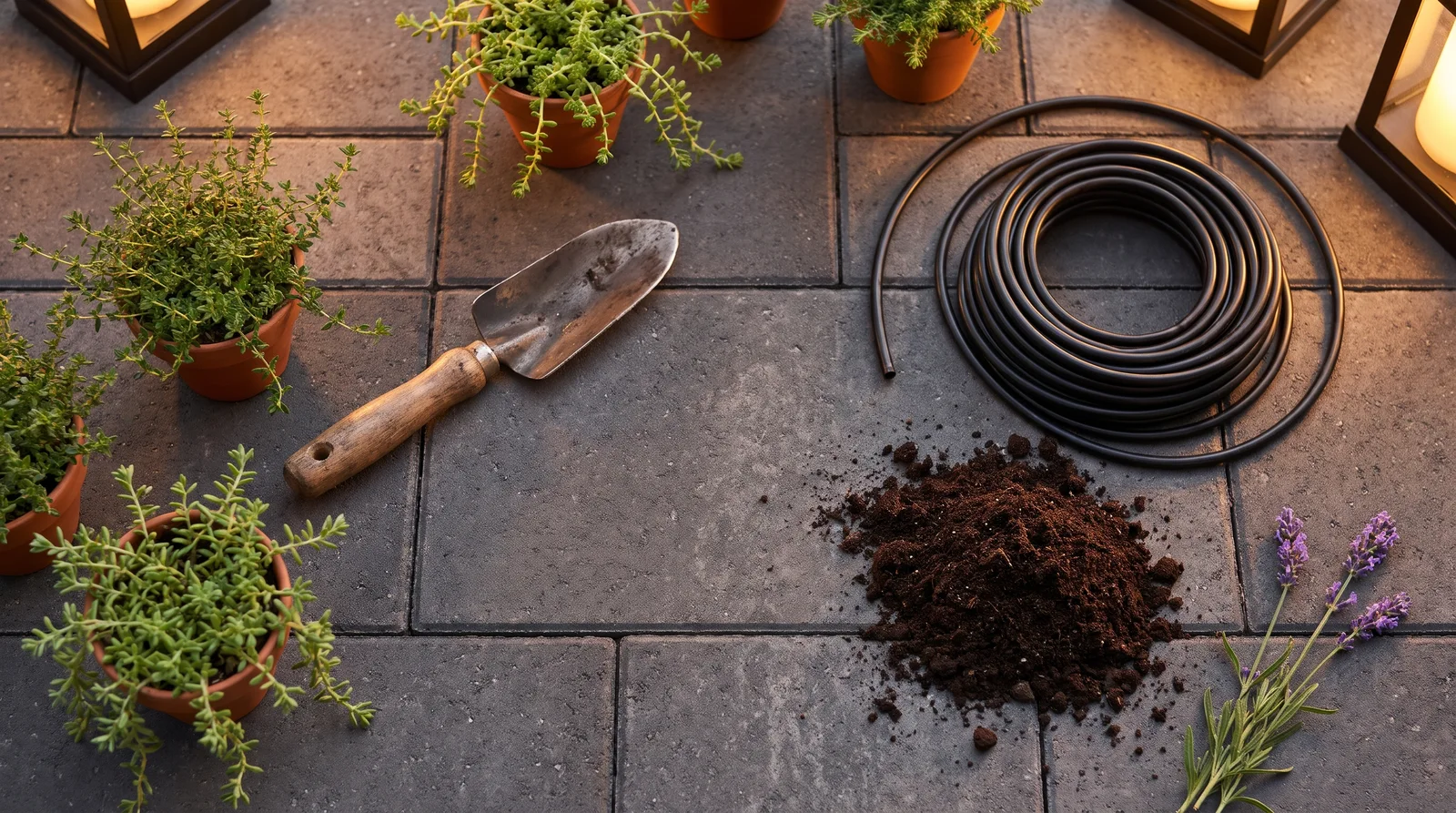
 groundcover
Groundcovers for San Diego County Yards: Prep and Planting
Anthony Criss · November 20, 2026
Key takeaways
Slope, sun, foot traffic and soil should pick your groundcover, not the plant tag.
Ground prep and drainage matter more than which plant you choose.
Plant in the rainy season, roughly October to April, and water often at first before tapering.
Native groundcovers usually want little or no soil amendment, while non-natives often benefit from compost.
Synthetic turf does not qualify for the regional turf rebate, so check program rules before you commit.
The best groundcover for a San Diego County yard is the one that matches your slope, sun, foot traffic and soil, and then gets planted into properly prepared, well-drained ground. Plant choice matters, but prep and drainage decide whether the planting thrives or fails. Plan to plant during the fall-to-spring rainy season and water deeply at first, then taper off.
Below is how we think about it at AJ Criss Industries, from choosing a plant to prepping the soil, planting, watering and checking rebates. If you want help on a North County property, our groundcover service page is a good place to start.
How to Choose a Groundcover for Your Yard
Start with the job the plant has to do. A groundcover on a slope has to hold soil. One beside a walkway has to tolerate the occasional step. One against a hot inland fence line has to handle heat and the odd frost. Pick the situation first, then the plant.
Slopes: choose plants that knit the soil together. Not every pretty spreader does. The San Diego Horticultural Society notes that pink knotweed suits flat areas, not slopes, because it doesn't control erosion.
Natives for low water: the Irvine Ranch Water District lists California fuchsia, yarrow, creeping sage and blue-eyed grass among native groundcover options.
Walkable areas: pair low plants with stepping stones or permeable interlocking pavers so the plants aren't the only thing taking traffic.
San Diego County has a huge palette to draw from. UC Master Gardeners report that over 1,550 native plant species are documented here, and 26 are endemic, per their native plant resources page. Natives also vary in water need: streamside plants want more water than coastal sage scrub plants, so don't mix them in one irrigation zone.
Ground Preparation: What Actually Matters
Most groundcover failures we see trace back to the ground, not the plant. Compacted fill, clay that holds water, and spots that puddle after a storm will kill a healthy planting. Prep is where the longevity is built.
Step 1: Clear the site
Remove existing grass and weeds first. If you'd rather not strip it, the San Diego chapter of the California Native Plant Society suggests cardboard and mulch layers to smother turf, and says to avoid chemical fertilizers. If the lawn is already coming out, our sod installation page explains the soil work that applies in reverse.
Step 2: Check drainage before you plant
Dig a test hole, fill it with water, and see how long it takes to drain. If water sits for many hours, plant roots will sit in it too. Look at grade as well: water should move away from the foundation, not toward it. Downspouts that dump at the base of a planting are a common culprit, and connecting them to a drain system fixes it. For persistent pooling, see our guide to drainage correction in North County.
Step 3: Decide whether to amend the soil
Here the experts genuinely disagree, and the answer depends on the plant. For non-natives, IRWD advises working 2 to 3 inches of compost into the top 6 inches of soil. For natives, it says they prefer lean, well-drained soil and usually need 1 inch or less of compost.
UC Master Gardeners go further: their native plants brochure says not to amend the soil when you plant. San Diego native-plant specialist Greg Rubin, writing in Pacific Horticulture, recommends clearing to bare ground and avoiding organic amendments, because incorporated amendments usually produce an unstable, weedy planting. That is one practitioner's method, but it matches the broader native-plant advice.
Our rule of thumb: match the plant to the soil you have rather than rebuilding the soil to suit the plant. Natives go into lean, well-drained ground. Non-native, thirstier groundcovers get the compost.
Planting Step by Step
The rainy season, about October through April, is the best time to plant because rainfall helps roots establish. The later in the year you plant, the more supplemental water the plants need. Overwatering during winter is its own risk for natives, so let the rain do its share.
Dig each hole about twice as wide as the nursery pot.
Fill the hole with water once or twice and let it drain.
Set the plant about 1 inch above the existing soil level so it doesn't settle too deep.
Backfill with the native soil and skip the fertilizer.
Mulch, keeping it off the stem, then soak again to settle air pockets.
Those steps come from UC Master Gardeners. The common mistakes are planting too deep, piling mulch against stems, and watering on a fixed schedule through a wet winter.
Irrigation and the First Year
New groundcover needs frequent, deep watering at first. UC Master Gardeners advise watering thoroughly every few days for several months, then tapering, and after the first year some natives can drop to roughly once a month. Taper gradually and watch the plants rather than the calendar.
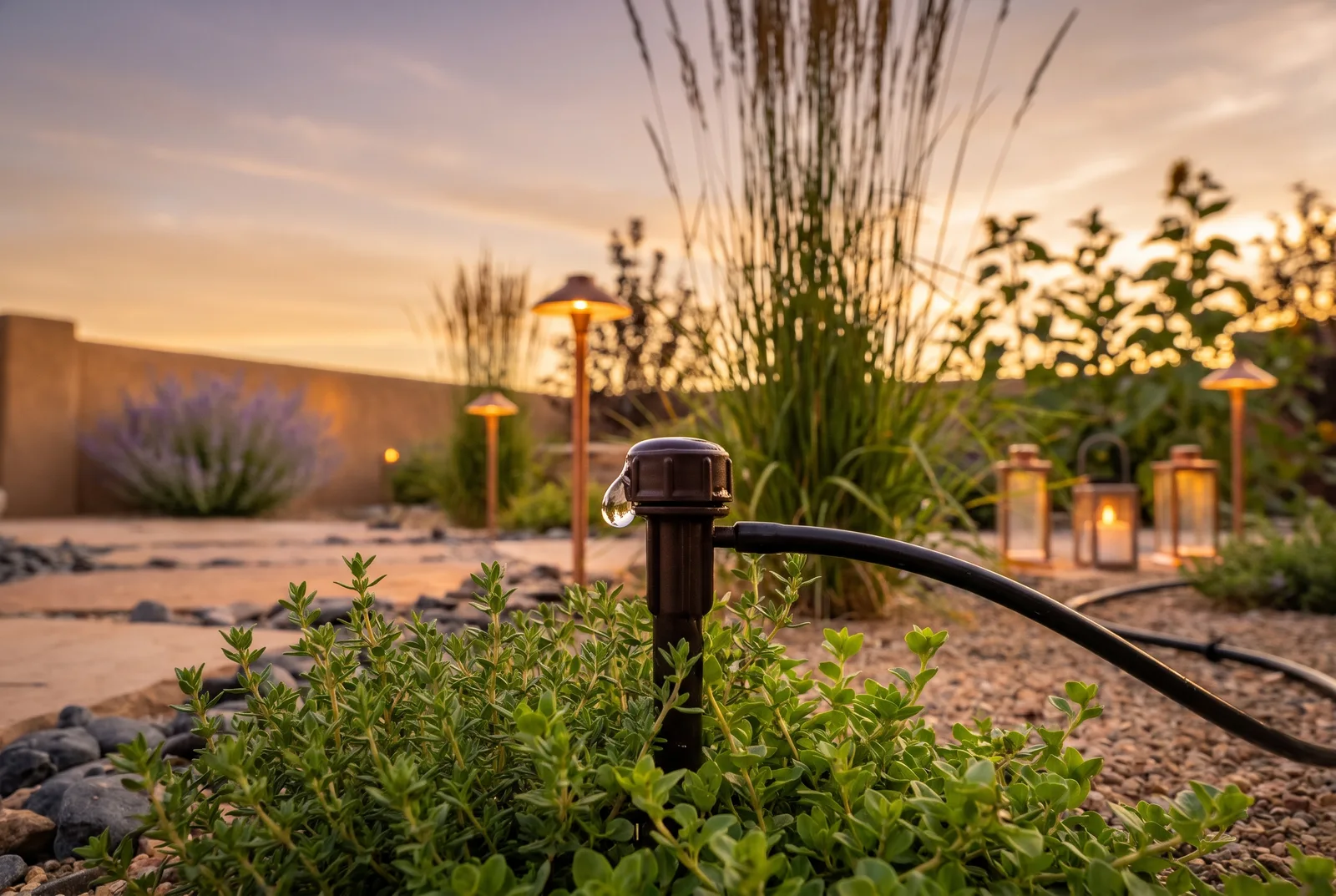
Old spray heads are a poor fit. They waste water on foliage and encourage weeds, and groundcovers do better on drip. If you're converting a lawn, see our notes on smart irrigation controllers, or look at our sprinklers and irrigation service.
Slopes, Edges and Hardscape
On steeper ground, plants alone may not be enough. A short retaining wall or terrace can tame the grade so plants have a stable place to root, and it gives you a chance to build in drainage behind it. For high-traffic spots, mix in flagstone or pavers. The CNPS San Diego guide says permeable surfaces should have at least 1/4 inch between pavers so water can soak in.
Turf-to-Groundcover Rebates in North County
If you're replacing a lawn, a rebate may offset part of the cost. The regional program, run through Metropolitan Water District, pays $2.00 per square foot up to 5,000 square feet per year. Projects need 3 plants per 100 square feet, and synthetic turf is not an approved option, per the SoCal Water$mart turf program. We install synthetic grass too, but if the rebate matters to you, groundcover is the route that qualifies.
The County's program for unincorporated areas has offered $3 to $4 per square foot with a bonus for California natives, according to the County of San Diego. Amounts and eligibility change, and your water district may differ, so confirm on the live page. Reserve funds before you start, since you can't apply after the fact. The San Diego County Water Authority also lists weather-based irrigation controller rebates.
Common Questions
When is the best time to plant groundcover in San Diego County?
Fall through early spring, roughly October to April, when rain helps roots establish. If your project can't start until summer, plan on more supplemental watering.
Should I add compost before planting groundcover?
It depends on the plant. Non-natives usually benefit from compost worked into the top few inches, while natives generally want lean soil with little or none.
Do I need drainage work before planting?
If water pools or the fill-and-drain test is slow, yes. Fixing grade or adding a drain first is far cheaper than replacing dead plants. See our guide to a yard drainage contractor in Escondido.
Can I use artificial turf and still get the rebate?
Not under the regional turf program, which doesn't approve synthetic turf as a conversion option. Our comparison of artificial grass vs sod covers the tradeoffs.
Start With the Ground
A good groundcover planting is mostly decided before a single plant goes in: the right plant for the slope and sun, soil that drains, and a watering plan that tapers over the first year. Get those right and the yard is low-maintenance for years.
If you'd like a second set of eyes on your soil, drainage and slope, get a quote from AJ Criss Industries and we'll walk the property with you.
Sources
FRANK'S FAVORITES: Ground Covers for San Diego Gardens — San Diego Horticultural Society
Ground cover plants: beautiful alternatives that thrive without a lawn - Irvine Ranch Water District — Irvine Ranch Water District
Native Plant Resources — UC Master Gardeners of San Diego County
San Diego CNPS Brochure-web — California Native Plant Society, San Diego Chapter
Native Plants Brochure — UC Master Gardeners of San Diego County
Pacific Horticulture — Pacific Horticulture
San Diego CNPS Brochure — California Native Plant Society, San Diego Chapter
Turf Replacement Program – English – SoCal Water$mart — Metropolitan Water District of Southern California