
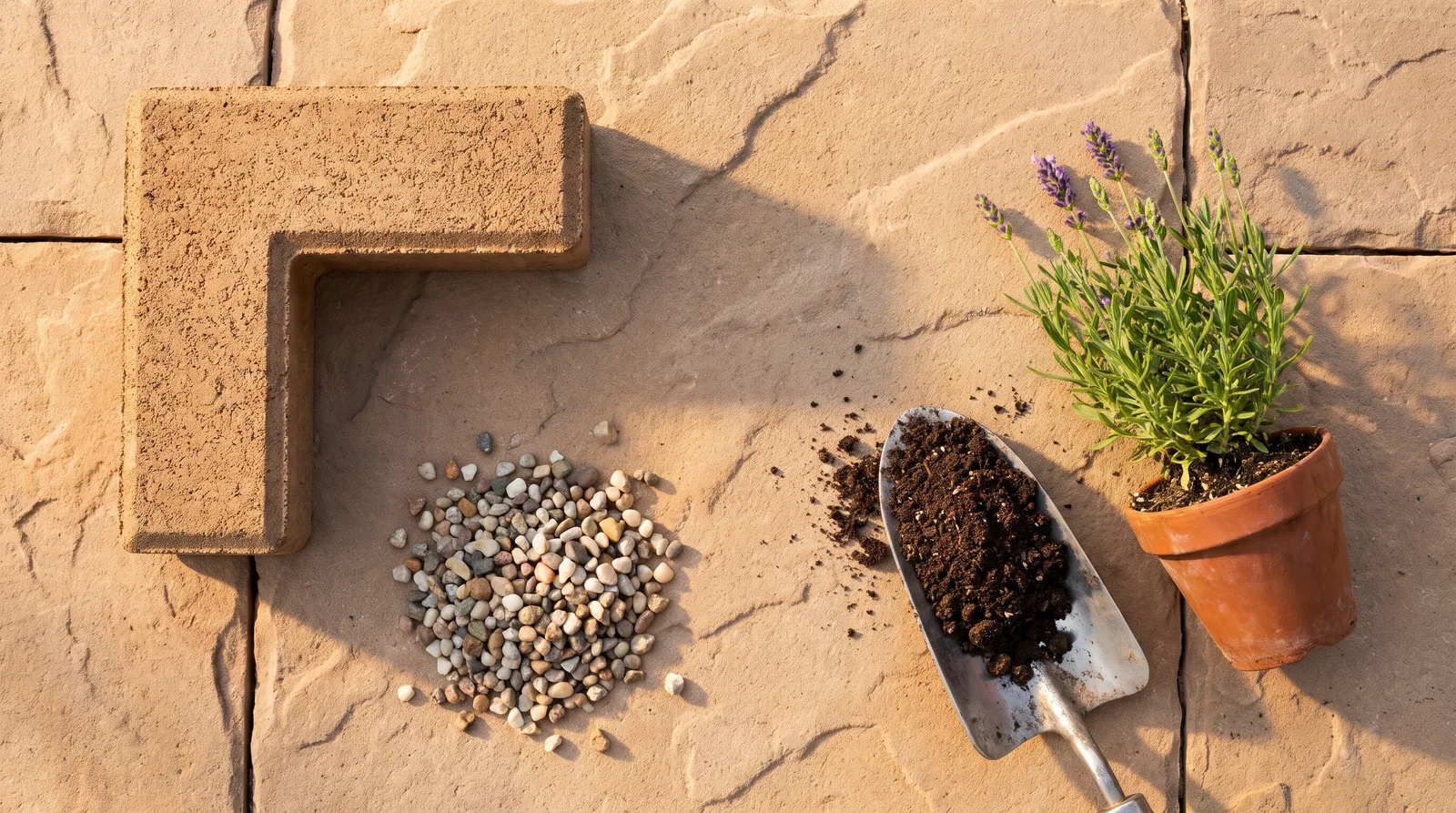
 planter boxes
Built-In Planter Boxes in San Diego: Build Them to Last
Anthony Criss · November 25, 2026
Key takeaways
A lasting built-in planter needs a sound footing, a drained base and soil that doesn't form layers.
A planter can count as a retaining wall: the City of San Diego's trigger is over 3 feet measured from the top of the footing.
Weep holes or wall drains plus gravel backfill keep water pressure off the wall.
Plan drip irrigation before the walls go up, since raised beds dry out fast.
Check which city or county office covers your lot before you build.
A built-in planter box that lasts in San Diego needs three things done right: a footing and wall sized for its height, drainage out the bottom, and a soil mix that drains instead of sitting in layers. If it is also holding back soil or taller than about 3 feet from the footing, it may count as a retaining wall and need a permit.
At AJ Criss Industries, we build masonry planters alongside patios, walkways and retaining walls across North County. Most failures we see trace back to water, not to the block. Here is how to plan the material, the drainage and the soil so your planter holds up.
Is it a planter or a retaining wall?
A freestanding planter sits on top of the ground. A built-in planter is often cut into a slope or backed by soil, which makes it work like a retaining wall. That matters for permits. The City of San Diego requires a permit when a wall is over three feet high, measured from the top of the footing to the highest point of the wall, according to the City's Information Bulletin 220.
Other triggers can apply, including walls that carry loads such as driveways, walkways or fences, and tiered walls over a combined six feet. Because the footing counts, a planter that looks 2.5 feet tall above grade can measure taller once the buried footing is included. Confirm that with your jurisdiction.
Rules also depend on where you live. Unincorporated county lots follow County of San Diego forms, while Escondido, Carlsbad, Vista and other cities set their own. For a deeper look at height and permits, see our Escondido retaining wall FAQ.
Choosing materials for San Diego sun and irrigation
Iowa State Extension lists decay-resistant wood, composite lumber, metal, concrete block, rock and brick as common wall materials in its raised bed planter guide. For permanent built-in beds, we mostly work in masonry. This is our field experience, not a study.
Block with stucco or stone veneer: the most durable option. It matches a house or patio and handles years of irrigation.
Natural stone: long-lived and attractive, with more labor in the install. See our slate and flagstone work.
Redwood or cedar: warm looking and rot resistant, but wood will eventually need replacing in constant moisture.
Composite or metal: low upkeep, best for smaller or modern designs.
If you use wood, avoid railroad ties because of creosote, and avoid lumber made before 2004, which may contain arsenic-based preservatives, per Iowa State. Iowa State also advises securing walls against bowing and reinforcing the corners, which matter most for preventing failure.
A finished top matters too. A cap sheds water and gives you a seat ledge; see our custom wall caps.
Drainage that actually works
Planter soil stays damp, and damp soil pushes water against the wall. Without a way out, that water builds pressure, stains the face and can crack or tilt the wall.
For masonry retaining walls, the County's form says wall drains are four inches in diameter, placed at 6-foot intervals at the bottom of the wall, per County planning form PDS 083. We use the same thinking on planters: drain at the base, with clean gravel behind it so water reaches the outlet.
Put weep holes or a drain line at the bottom course.
Backfill with gravel and wrap it in fabric so soil doesn't clog it.
Send the outlet to daylight or a drain, never onto a neighbor's lot or against the house.
Slope the fill away from nearby structures.
If the planter backs up to a house or finished surface, a waterproofing membrane helps, but it does not replace drainage. W. R. Meadows' guidance says drainage components are still needed to relieve water pressure on waterproofed walls.
Planters on a patio slab have the hardest drainage problem because water has nowhere to go. We plan slab slope and outlets first, and we protect pavers from staining. If your yard already puddles, start with drainage correction.
Soil: test it, don't layer it
North County soil is often clay or compacted fill. UC Master Gardeners list water pooling after irrigation and hard, dense soil as signs of compaction in their soil management guide.
A quick check: dig a hole 1 foot deep, fill it with water, let it drain, then refill it. If less than 2 inches drain in an hour, drainage is poor, according to UC Master Gardeners of Placer County. Poor results mean breaking up the ground under the bed and checking the outlet before you plant.
Don't dump good soil on top of hard native soil. UC Master Gardeners of San Luis Obispo advise mixing the top several inches of native soil with the bed fill to prevent abrupt boundaries that impede drainage. Leave at least 2 inches below the top for mulch, per the same source.
On organic matter, sources differ. University of Maryland Extension says garden soil in raised beds should be 25%-50% organic matter by volume, per its raised bed soil guide. Other guidance for in-ground soil is lower, so match the mix to what you plant.
For ground-level beds, gophers are a concern. UC Master Gardeners of Marin suggest half-inch hardware cloth on the bottom of boxed beds, in their bed preparation notes.
Irrigation and upkeep
Raised beds dry out faster than ground soil, so plan irrigation before the walls go up. Drip lines fit well and keep overspray off the wall face, which helps prevent staining and white mineral buildup on masonry. Our sprinkler and irrigation installs cover this.
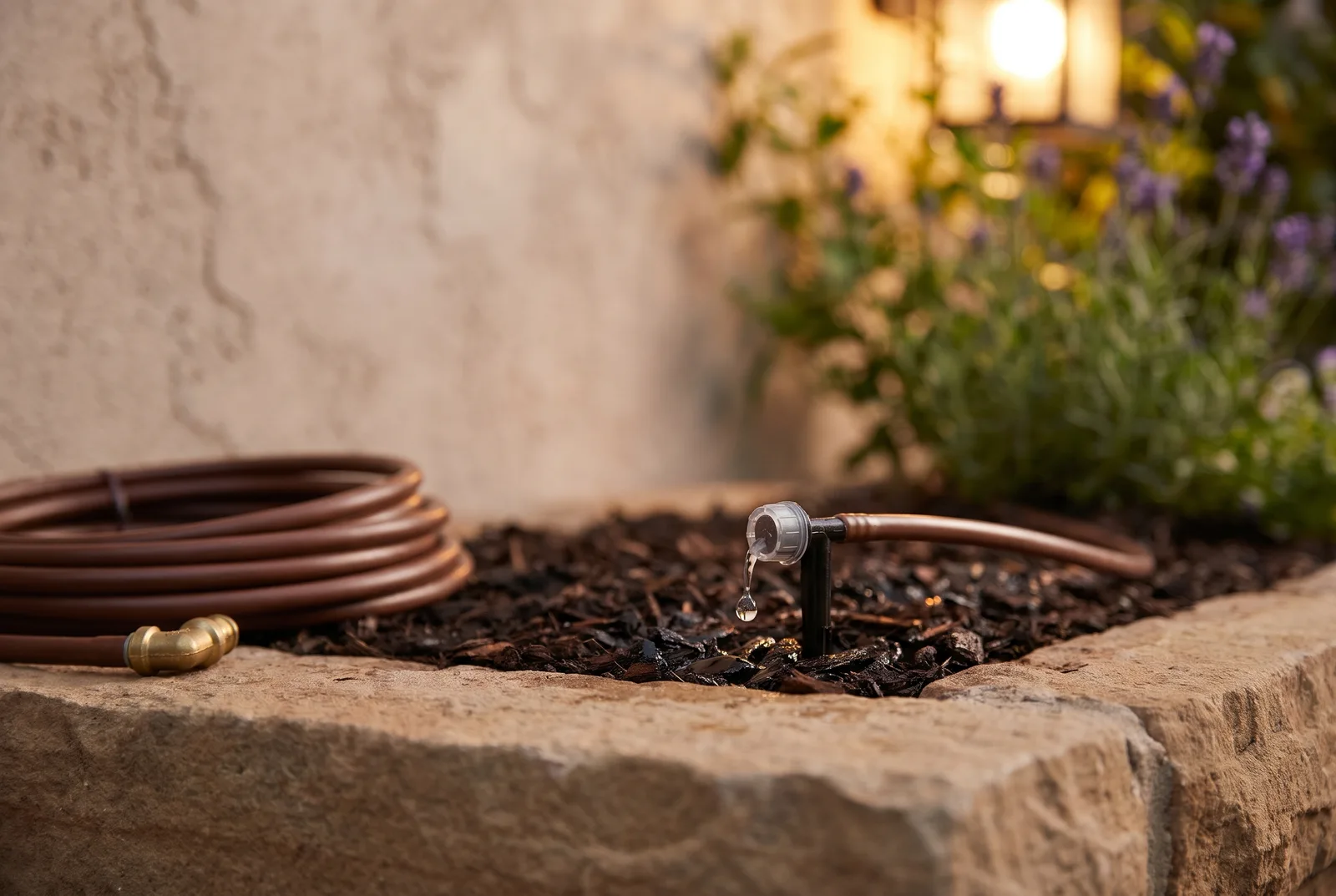
Plan to top up compost each season and check the weep holes now and then for clogs.
Sizing for real use
Width depends on reach. Iowa State says beds reached from one side should be no wider than 1.5 to 2 feet, while two-sided beds can be 3 to 4 feet. UC Master Gardeners of Alameda County allow up to 3 feet for one side and 4 feet for two, per their raised bed guide. The gap comes from comfortable arm's reach versus stretching across.
Height depends on who uses it. Iowa State says a bed for a wheelchair user should be about 2 to 3 feet high. A wide cap lets people garden or sit on the edge. A planter near a patio can also double as seating beside a fire pit.
Common mistakes to avoid
No drainage at the base.
A wall taller than its footing supports, or a permit missed because the footing wasn't counted.
Soil piled against the house wall without a barrier.
Sprinklers spraying the wall face.
Building over a failed or poorly compacted base.
Planning a planter in North County
For a site visit, know your property lines, slopes, what sits above the wall and where water already flows. We look at those first, then design the footing, drainage and fill. See our planter box work or get a quote.
Do I need a permit for a retaining wall in San Diego?
Usually when it is over three feet, measured from the top of the footing, or when it carries loads like a driveway or fence. Tiered walls have their own limit. Your city or the County decides, so confirm before building.
Can a retaining wall contractor build planters too?
Yes, because a built-in planter is structurally similar to a low retaining wall. Ask about footing, drainage and licensing before you sign.
How do I know if my yard has a drainage problem?
Look for water pooling after irrigation or rain, damp spots against walls and hard, dense soil. A hole test can show how fast water drains. If water sits, correct the drainage before building.
Do French drains help around planters?
They can, when water collects behind or beside a wall. The drain needs a clear outlet and gravel around it, and it should be tested to confirm it works.
Build the planter for the water
A good built-in planter looks simple, but the work is under the surface: footing, drainage and soil. Get those right and the walls and plants will last. Contact AJ Criss Industries to plan yours.
Sources
How to Obtain a Permit for a Retaining Wall Using the City of San Diego Standard Drawings and Specifications — City of San Diego Development Services Department
Creating Raised Bed Planters — Iowa State University Extension and Outreach
County of San Diego, Planning & Development Services — County of San Diego Planning & Development Services
Waterproofing a Retaining Wall: A Guide from W. R. Meadows - Blog - W. R. Meadows — W. R. Meadows
Managing and Amending Soil — UC Master Gardener Program (UC Agriculture and Natural Resources)
Got Compaction? How to Improve Soil Drainage — UC Master Gardeners of Placer County (UC Agriculture and Natural Resources)
UC Master Gardeners- Diggin' it in SLO - Agriculture and Natural Resources Blogs — UC Master Gardeners of San Luis Obispo County (UC Agriculture and Natural Resources)
Soil to Fill Raised Beds — University of Maryland Extension