
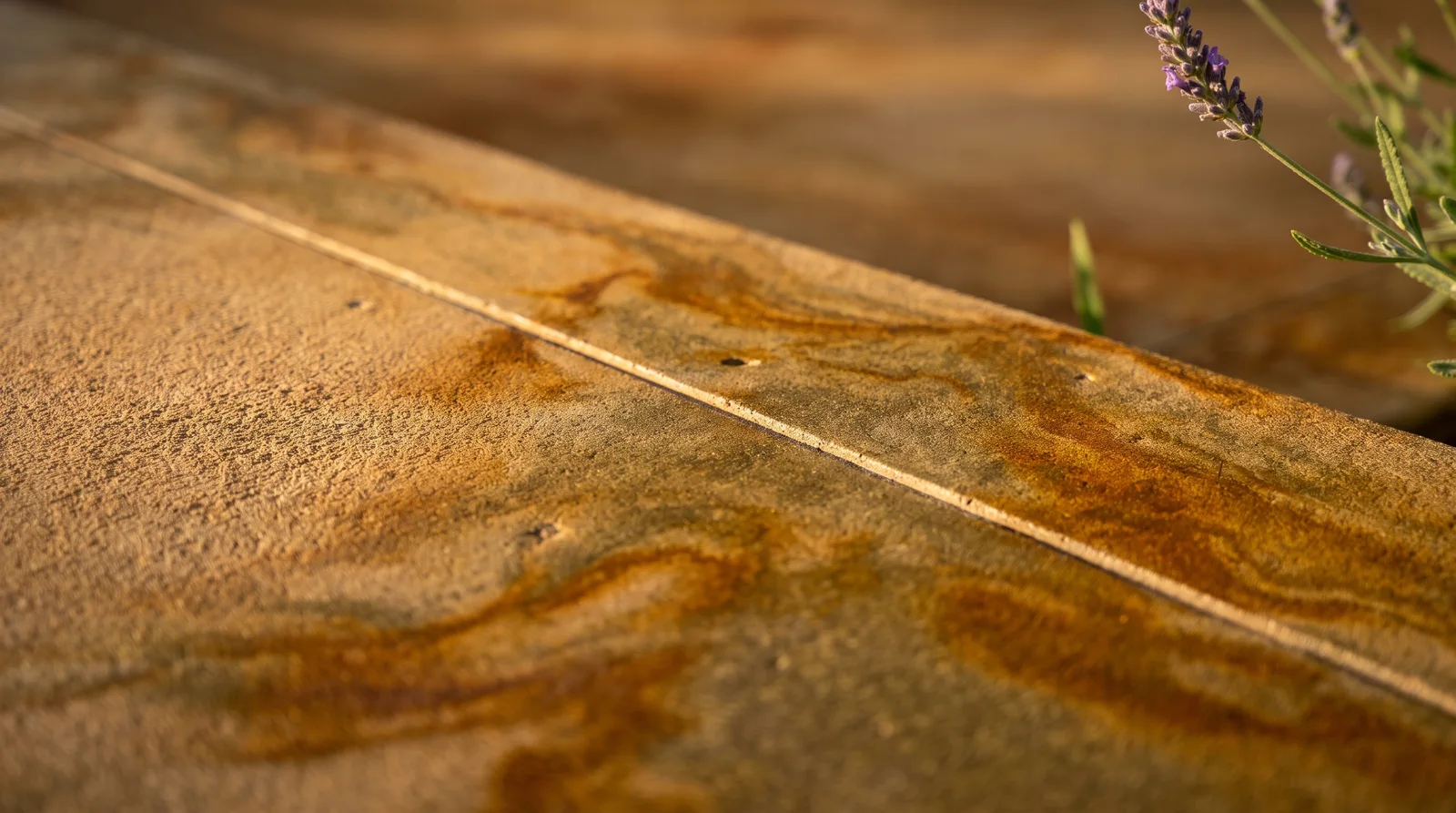
 acid stained concrete
Acid Stained Concrete Cost in San Diego: What to Expect
Anthony Criss · November 23, 2026
Key takeaways
Acid staining is commonly priced at about $2–$6 per square foot for basic work and $12–$25 for complex designs.
Slab condition, prep and design complexity move the price more than the stain itself.
The color bonds into the concrete, but the sealer takes the wear and has to be maintained.
Stain results vary slab to slab, and a mistake can't be sanded off, so a test patch matters.
If a slab is too old, patched or contaminated, pavers or flagstone can be the better call.
Acid stained concrete typically costs about $2–$6 per square foot for basic work and $12–$25 per square foot for complex colors and patterns, according to Angi's cost data. Those are national figures, not San Diego quotes, so treat them as a starting range. What you actually pay depends mostly on the slab you have and the prep it needs.
We are AJ Criss Industries, a family-run hardscaping and landscaping contractor serving Escondido and North County San Diego. Below is what moves the price, why two quotes for the same patio can differ, and how stained concrete holds up in our sun and soil.
What acid stain costs per square foot
Published ranges are wide. Angi breaks them into tiers: basic at $2–$4, intermediate at $4–$10, upgraded at $8–$15 and high-end at $12–$25 per square foot. HomeGuide gives an even wider spread of $3–$25 per square foot installed for acid-based stain.
Angi's only California city figure is Los Angeles, at about $13,700 for 1,000 square feet. That is a nearby benchmark, not a San Diego price. The honest way to get a local number is a site visit, because the same square footage can land at either end of the range.
Angi also notes that larger areas often get a lower per-square-foot price, while tight corners, small entries and curves add time. A 300 square foot patio can come in anywhere from $600 to $8,400 depending on color count, stenciling, sealer and repairs.
What sets the price
Prep and repairs: Angi lists old floor removal at $1.50–$3.50 per square foot, concrete repairs at $800–$2,700 and resurfacing at $3–$5 per square foot.
Design: more colors, borders, saw-cut patterns and stenciling mean more labor.
Sealer: material runs roughly $0.85–$1.15 per square foot for acrylic and $3–$7 for epoxy, per Angi.
Labor: Angi says materials are less than half the project cost, and labor is the larger share.
Size and shape: small, curved or broken-up areas cost more per square foot than one open slab.
Notice that the stain itself is the cheap part. You are mostly paying for the preparation, the skill of applying it and the sealing. If you are also pricing a new slab, see our page on regular concrete and our color and acid stain concrete work.
Why quotes differ: the slab matters more than the stain
Acid stain is a chemical reaction. Angi describes it as hydrochloric acid with metallic salts that react with the concrete to give a marbled, mottled look. Because the color forms inside the surface rather than sitting on top, every slab responds a little differently.
That is why a good contractor looks at the slab before quoting. Things that change the result and the price:
Age and cure: new concrete generally needs about four weeks to cure before staining. Staining sooner can give weak or unpredictable color.
Old sealers, paint, oil or grease: these block the reaction and have to be removed first.
Patches and repairs: patched areas take stain differently from the original concrete and show through.
Moisture and drainage: water moving under or across a slab can cloud a sealer and cause trouble later. We check where water goes before we ever open a bottle of stain. Our guide to drainage correction in North County explains how.
Be ready for variation. A patent document from the U.S. Patent and Trademark Office describes acid staining as producing variability rather than uniformity. That is the appeal, and also the risk. Angi points out that you can't sand off a stain mistake, so we recommend a small test area first.
How stained concrete holds up outdoors in San Diego
The same patent document describes the bond as permanent, one that won't chip or peel. In practice the color is not the weak point. The sealer on top is, because it faces sun, foot traffic, car tires and the occasional spill.
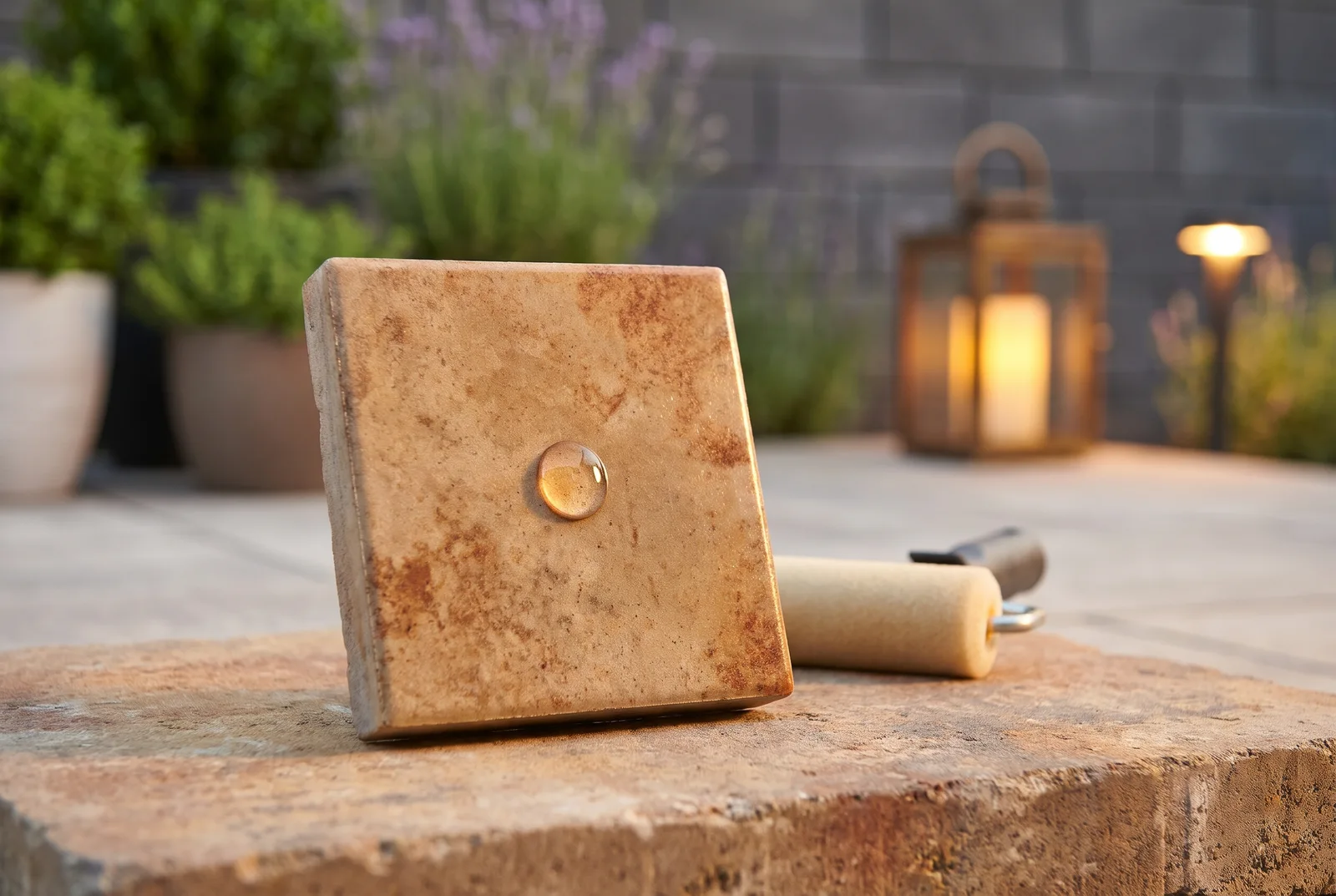
An exterior slab needs a sealer made for exterior decorative use. Concrete Network warns that without one the color can shift and fade fast. Reseal timing varies a lot between sources, from every year or two to every five years. The real answer depends on sun exposure, traffic and sealer type, so we judge it by the wear we see rather than a calendar.
Sealers and San Diego County rules
Sealer choice here is regulated. San Diego County's Rule 67.0.1, described in the Air Pollution Control District's board package, limits VOC content in architectural coatings, explicitly including stains and sealers, and applies to anyone who applies a coating in the county. The district's workshop report shows separate categories for concrete and masonry sealers and reactive penetrating sealers. The amended rule is dated 1/1/2022 in EPA's proposed approval notice. The practical point: a product bought online or out of state may not be legal to apply here, so we use compliant sealers.
Caring for an acid stained patio or driveway
Sweep regularly and mop with warm water. If you need more, use a mild pH-neutral cleaner.
Skip vinegar, bleach, ammonia, steam and harsh household cleaners, which can damage the sealer and dull the color.
Wipe up oil, wine, soda and pet accidents quickly.
Don't wax an outdoor surface. Wax is for interior floors. Outside, watch the sealer for wear and recoat.
When resealing, match the sealer type. Putting water-based over solvent-based, or the reverse, can cause bubbling and peeling.
Milky or white patches usually point to moisture trapped under the sealer, which is another reason drainage matters.
When acid stain is not the right choice
Stain is a good fit for a sound, clean, well-drained slab. It is a poor fit for an old slab with heavy patching, unknown sealers or oil staining, or for areas where soil movement keeps cracking the concrete. Staining hides none of that.
In those cases we often suggest another surface. Interlocking pavers can be repaired in sections and handle ground movement well. Slate and flagstone give natural color that doesn't depend on a sealer. For driveways, see our comparison of pavers vs concrete driveways.
What a good quote should include
How the slab will be prepped and cleaned, and what happens to old sealer.
Number of colors and any patterns or saw cuts.
Sealer type, number of coats and confirmation that it is compliant for San Diego County.
A test patch before full application.
What happens if the slab won't take stain.
The contractor's license number. Our guide to choosing a landscaping contractor in North County covers what to check.
How much does acid stained concrete cost in San Diego?
Published national ranges run from about $2–$6 per square foot for basic work to $12–$25 for complex designs. No independent source gives a San Diego-specific figure, so the reliable number comes from a site visit that accounts for prep, design and sealer.
Does ground preparation matter for a stained slab?
Yes. A slab sitting on poorly drained or unstable soil can crack or trap moisture under the sealer. We look at grading and drainage first. Our article on sod installation and soil prep shows the same approach we take on any project.
Can acid stain go over old concrete?
Sometimes. Old or worn concrete, or concrete with sealers, paint, grease or heavy patching, may react little or unevenly. A test patch tells you before you commit.
Get a real number for your slab
Acid stain can be a durable, good-looking surface when the slab is sound, the prep is done right and the sealer is kept up. Expect the price to follow the prep and design more than the stain. If you want a firm number for your patio or driveway, request a quote and we will look at the slab, test the stain and tell you plainly whether it is the right fit.
Sources
How Much Do Stained Concrete Floors Cost? [2026 Data] — Angi
How Much Does it Cost to Stain Concrete Floors? (2026) — HomeGuide
Substrate coloration methods — United States Patent and Trademark Office
Fixing Acid Stains — Concrete Network
Air Pollution Control Board San Diego County Air Pollution Control District — San Diego County Air Pollution Control District
AIR POLLUTION CONTROL DISTRICT COUNTY OF SAN DIEGO -1- — San Diego County Air Pollution Control District
6560-50-P ENVIRONMENTAL PROTECTION AGENCY 40 CFR Part 52 — U.S. Environmental Protection Agency